Felting is an ancient method to make fabric from wool, originating probably around 8000 years ago. In contrast, nuno felting is a much more recent technique, invented by the australian textile artist Polly Stirling in the late 1990’s.
A thin layer of wool is laid on cloth such as silk, cotton, wool, gauze, hamp or linen, and they are felted together. In this process the cloth shrinks to roughly halfsize and its surface becomes crinkly, and the colours of the wool and the cloth blend together.
Here I sketch how I use this technique to make a blouse out of recycled silk clothes – an old scarf found in a thrift store and an old Indian sari.
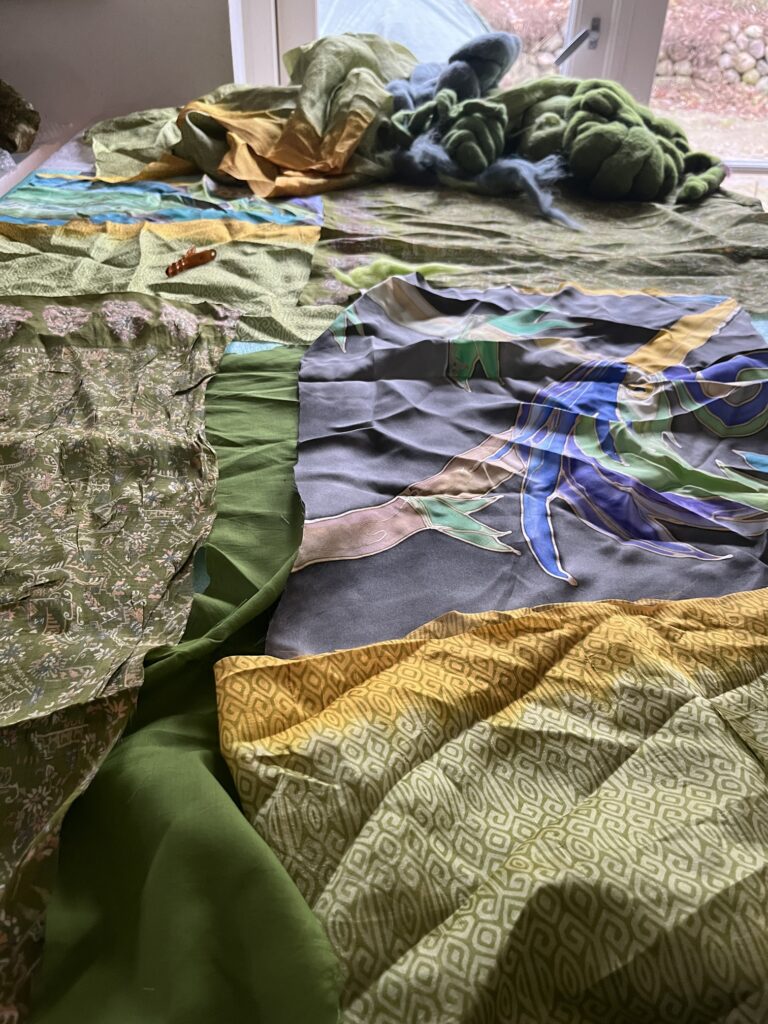
Firstly, a sheet of bubble wrap is placed on a large, robust table, and a blouse template – that is to say, a piece of foam sheet cut out as a blouse about 1.2m x 1.2m in size – is placed on top. Pieces of silk are clipped out from the sari and scarf so that they cover the template, with a little overlap. Also some felting wool with matching colours is chosen: I use fine merino wool. This initial design step is crucial: I take a lot of care to select matching colours and patterns.
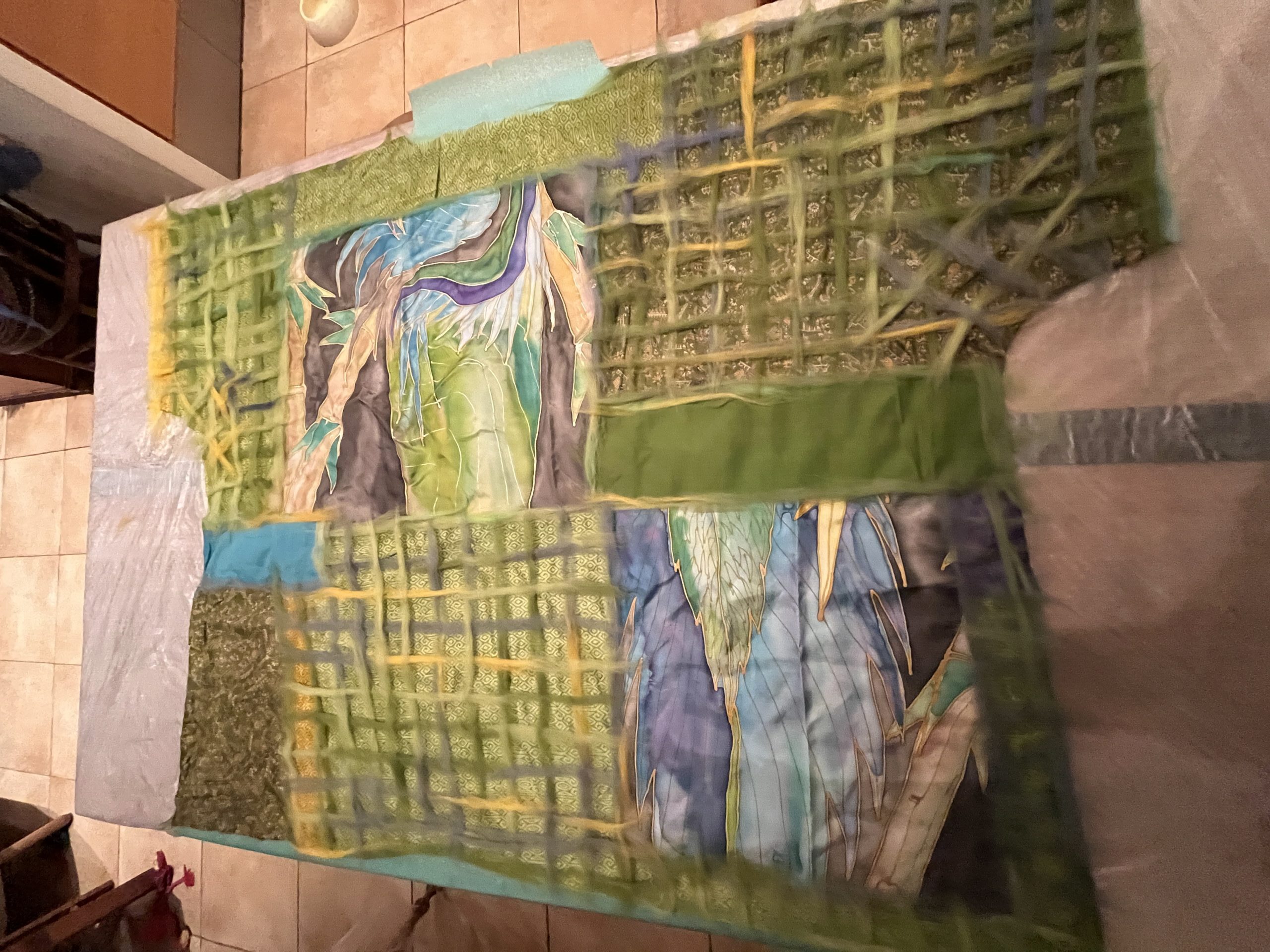
A thin layer of felt wool is now applied to the fabric. The next photo shows how felting wool has been applied in a grid form to the pieces from the sari (greenish). The pieces from the scarf (blue-purple) have felting wool applied from underneath, that is, laid directly on the template before the fabric is laid on top: this gives a different visual effect to the final blouse.
Water with a little detergent is sprayed onto the blouse which is then covered with a thin plastic sheet.
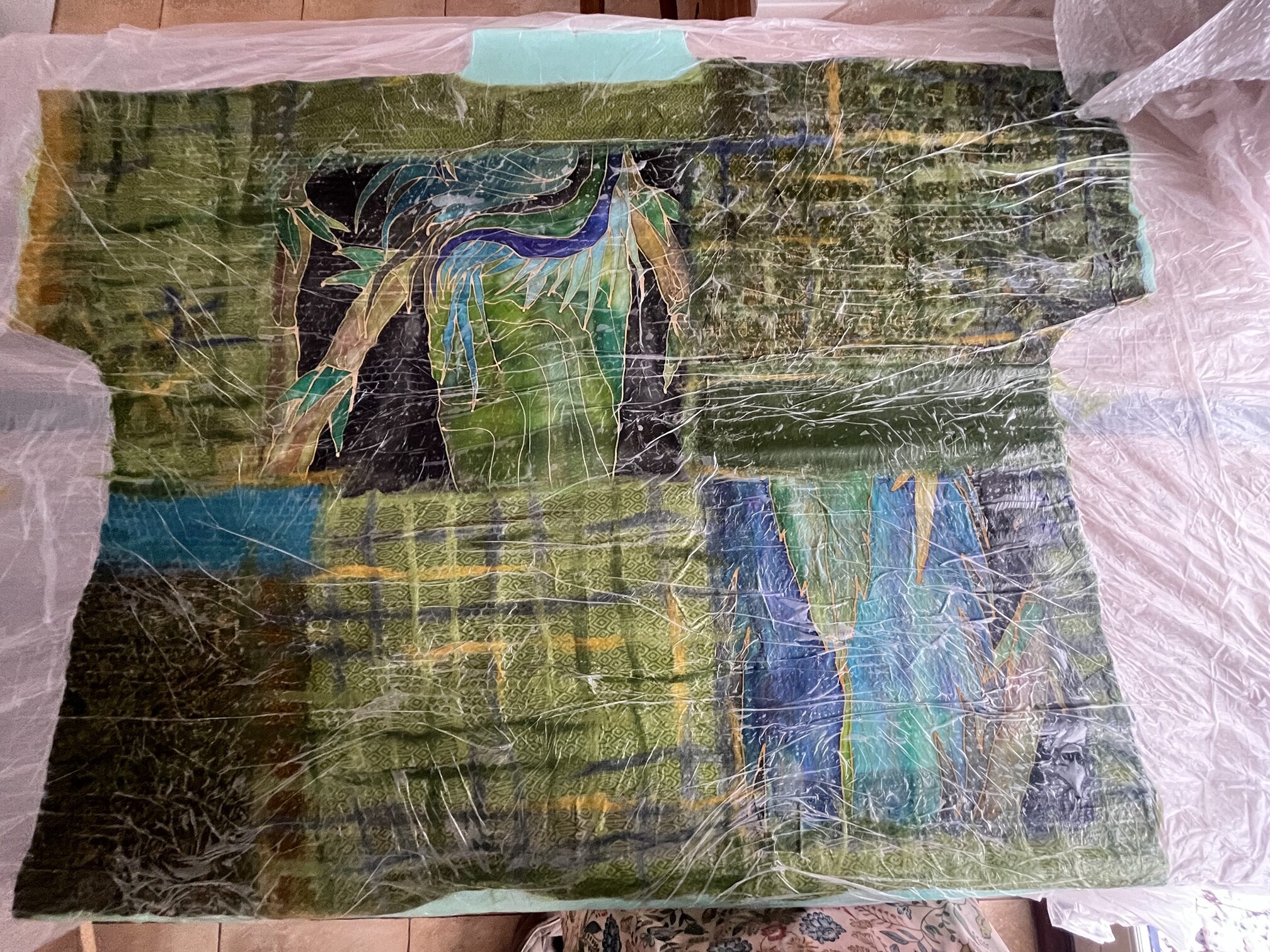
A sander is gently applied to coax the ends of the wool fibers to penetrate the material.
Now the front of the blouse and the template are lifted up and carefully flipped over, and the whole process is repeated to make the back of the blouse. The back and front are joined by using flaps that are folded around the edges. The next photo shows the back after application of the felt wool.

As before, this is dampened, covered with a thin plastic sheet, and the sander applied again. The blouse, with the template inside, is rolled around a foam insulation pipe with bubble wrap on both sides.
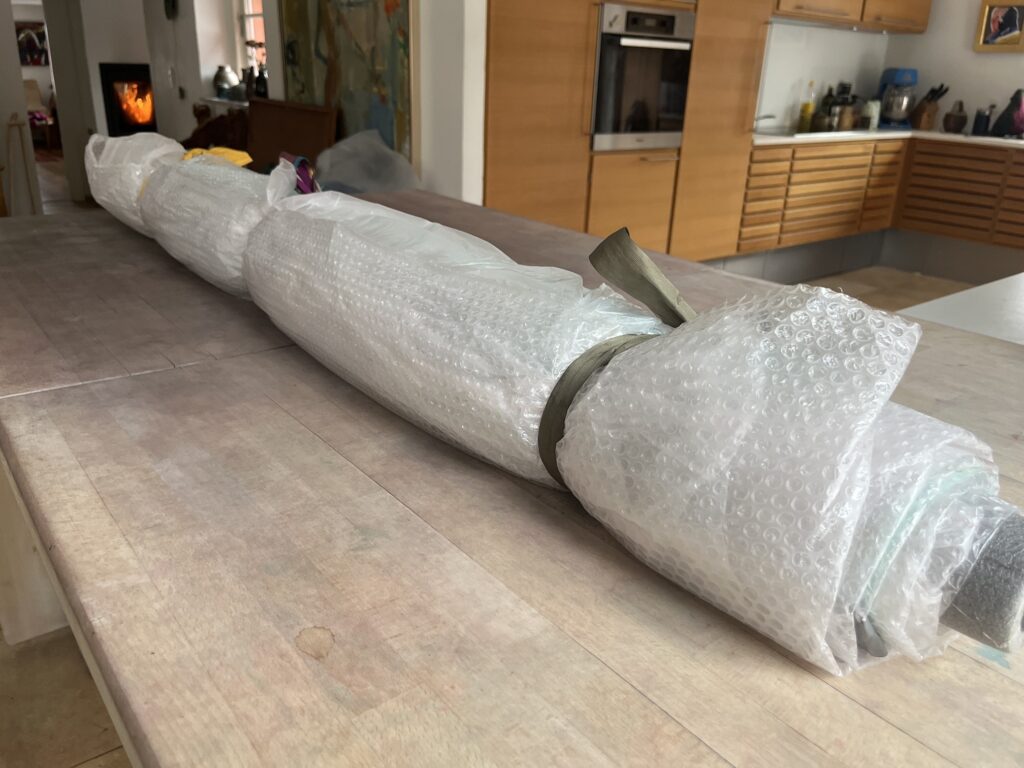
This is rolled 800-1000 times to further coax the ends of the wool fibers to penetrate the fabric. Now the blouse can be taken out of the roll, dipped in warm water with detergent, and vigorously thrown up and down on the table. This is the felting step: the wool fibers shrink, pulling the fabric with them, resulting in a material with a crinkly texture. The blouse shrinks from about 1.2m x 1.2m to about 0.6m x 0.6m. Finally it is massaged by hand until the size is right, and allowed to dry.
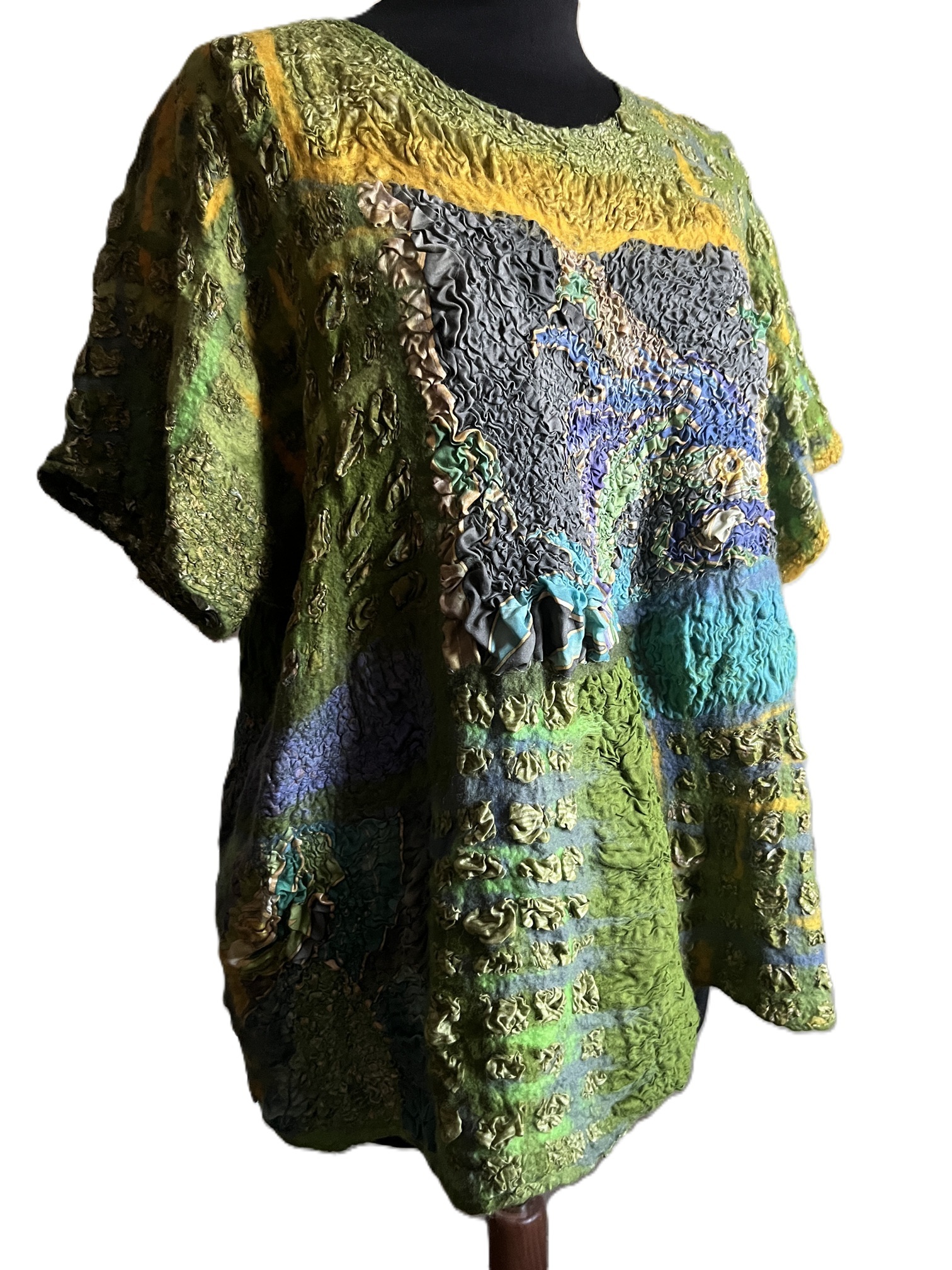
And the final result! The blouse is fine on both sides and has a good body form.
For a detailed description of the process, see my book Old Clothes in Disguise.
Two other books that I can recommend are:
Inge Bauer: An-Gewand-t felted. A Gallery Book/Felting Impressions, MaroVerlag, Augsburg (2010).
Lizzie Houghton: Felting Fashion, Creative and Inspirational Techniques for feltmakers, Batsford, London (2009).
Henriette Giese